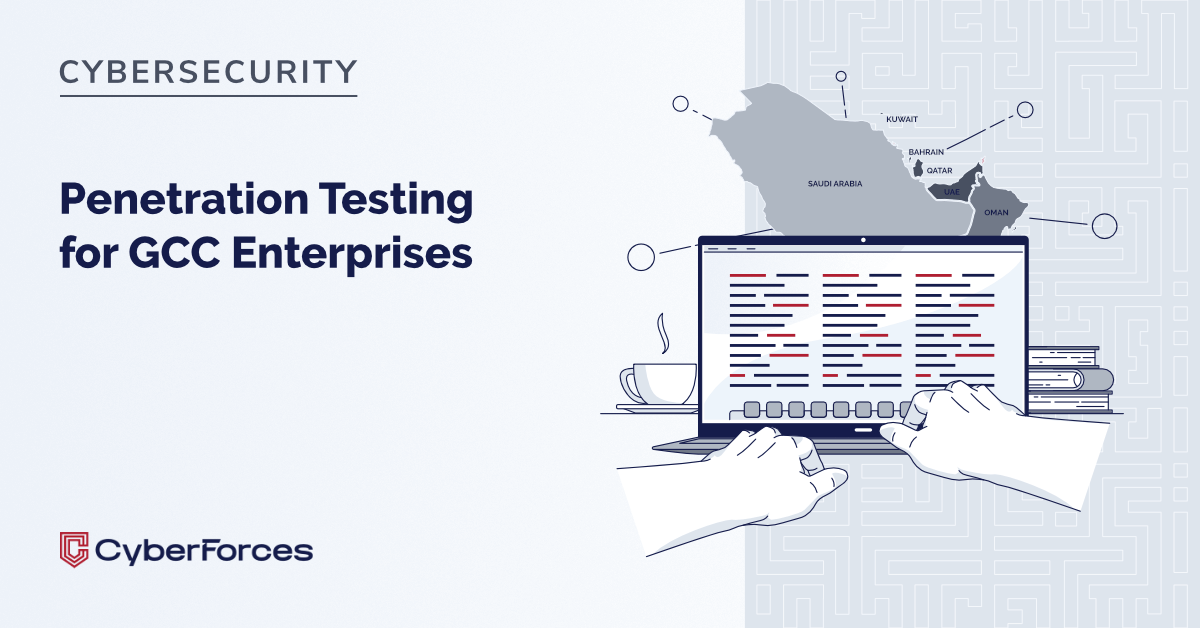
Cyber threats are evolving faster than ever — and nowhere is this more visible than in the Gulf Cooperation Council (GCC) region. With rapid digitization, high-value infrastructures, and ambitious national strategies such as UAE Vision 2031 and Saudi Vision 2030, organizations in the UAE, Saudi Arabia, Qatar, and Bahrain are expanding cloud adoption, smart services, and critical digital platforms. This growth presents lucrative opportunities for attackers and mandates robust cybersecurity measures.
Among these measures, penetration testing emerges as a cornerstone for proactive risk management. This article explains what penetration testing is, why it’s critical for Gulf markets, and how global best practices can help organisations in the region boost their security posture.
What Is Penetration Testing?
Penetration testing, also known as pentesting or ethical hacking, simulates real-world cyber attacks against systems, networks, or applications to uncover vulnerabilities before malicious actors do. Unlike automated scans, penetration testing is human-driven, context-aware, and tailored to business logic.
Core Types of Penetration Testing
- Network Pentesting – Identifies weaknesses in internal and external network configurations.
- Web Application Pentesting – Tests websites and APIs for common vulnerabilities (OWASP Top 10).
- Cloud Pentesting – Evaluates cloud environments such as AWS, Azure, and Google Cloud.
- Mobile Pentesting – Assesses security for Android and iOS applications.
- Red Team Exercises – Comprehensive, stealthy adversary emulation covering people, processes, and technology.
Why Penetration Testing Matters for the Gulf Region
1. Digital Transformation & Economic Diversification
GCC economies are investing heavily in digital services:
- Smart city initiatives (e.g., NEOM in Saudi Arabia)
- E-government platforms (Saudi’s Absher, UAE’s DubaiNow)
- FinTech and payment ecosystems
With increased connectivity comes increased risk. Penetration testing helps identify hidden vulnerabilities in the digital supply chain.
2. Regulatory and Compliance Requirements
Governments and regulators in the region are tightening cybersecurity mandates:
- UAE Information Assurance Standards
- Saudi National Cybersecurity Authority (NCA) Controls
- Qatar National Cyber Security Strategy
These frameworks often require regular security assessments and evidence of risk mitigation — making penetration testing a compliance imperative.
Global Examples with Relevance to GCC Security Strategy
Case 1: Change Healthcare Cyberattack (USA, 2024–2025 Impact)
In 2024, Change Healthcare, part of UnitedHealth Group, suffered a large-scale ransomware attack that disrupted healthcare payment processing across the United States.
The attack resulted in:
- Massive operational disruption
- Delayed medical payments nationwide
- Exposure of sensitive data
- Multi-billion-dollar financial impact
The root causes included weaknesses in access controls and insufficient security hardening of critical infrastructure.
GCC takeaway:
Highly interconnected sectors — healthcare, finance, smart infrastructure — require continuous penetration testing of identity management, privileged access, and third-party integrations.
Cloud misconfigurations and identity abuse remain among the most exploited attack vectors globally.
Case 2: SolarWinds Supply Chain Attack
The SolarWinds breach showed that attackers could compromise software providers and pivot into multiple enterprise environments without detection.
GCC takeaway: Expand security testing beyond your perimeter — test integrations, APIs, CI/CD pipelines, and third-party services commonly used across regional enterprises.
Case 3: Abu Dhabi Financial Services Firm (Hypothetical but Realistic)
Local financial institutions in the UAE reported attempted attacks against online banking modules exploiting weak session controls and business logic flaws.
GCC takeaway: Pentesting must include business logic test cases, not just technical vulnerabilities, especially in finance and eCommerce workflows.
Case 3: Abu Dhabi Financial Services Firm (Hypothetical but Realistic)
Local financial institutions in the UAE reported attempted attacks against online banking modules exploiting weak session controls and business logic flaws.
GCC takeaway: Pentesting must include business logic test cases, not just technical vulnerabilities, especially in finance and eCommerce workflows.
Key Benefits of Penetration Testing for GCC Organisations
Improved Risk Visibility
Pentests provide a detailed risk profile, enabling boards and CISOs to prioritise remediation efforts effectively.
Enhanced Incident Response
Simulated breaches improve incident readiness and refine response playbooks.
Competitive Advantage
Security assurances are becoming differentiating factors for customers, partners, and investors.
Business Continuity
Early detection and remediation reduce the likelihood of ransomware, data breaches, and system outages.
Best Practices for Effective Penetration Testing
To maximise value, organisations in the Gulf should follow these guidelines:
- Scope Based on Risk
Align tests with business-critical systems and threats relevant to your industry. - Use Expert Human Testers
Automated tools are useful but insufficient; expert insight finds deeper logic issues. - Integrate with DevOps
Run pentests continuously, especially modern CI/CD environments. - Report with Actionable Insights
Reports should prioritise risk, remediation steps, and contextual impact. - Retest After Mitigation
Validate fixes and ensure no regressions.
How Cyberforces Supports Gulf Enterprises
At Cyberforces, we specialise in tailored penetration testing services that align with GCC market needs and global security standards.
Our services include:
- External & Internal Network Pentesting
- Web & Mobile Pentesting
- Cloud Security Assessments
- Red Teaming and Purple Team Exercises
- Compliance-aligned Security Assessments
We help organisations not only identify vulnerabilities but also build resilient security postures.
For organisations in the UAE, Saudi Arabia, Qatar, and across the Gulf, penetration testing is more than a technical exercise — it’s a strategic investment in trust, resilience, and compliance. As cyber risks grow in sophistication, proactive testing becomes a prerequisite for safeguarding brand reputation, customer data, and operational continuity.
Protect. Detect. Respond. Penetration testing with global expertise and local relevance builds cybersecurity confidence in an evolving digital economy.
Frequently Asked Questions (FAQ)
Q1. How often should organisations in the Gulf conduct penetration tests?
Answer: Minimum annually, or after major system changes and deployments.
Q2. Is penetration testing mandatory for GCC financial institutions?
Answer: While mandates vary by country, regulators increasingly expect regular security assessments as part of risk frameworks.
Q3. What’s the difference between pentesting and vulnerability scanning?
Vulnerability scanning is an automated scan that identifies potential security weaknesses based on known signatures and databases. It is automatic and identifies potential issues. Penetration testing actively exploits those weaknesses to determine whether they can be used to compromise systems, escalate privileges, or access sensitive data.
In short:
- Vulnerability scanning identifies possible problems.
- Pentesting proves whether they are exploitable and represent real business risk.
Both are important — but only penetration testing simulates an actual attacker.
For organizations across the UAE and the wider GCC region, penetration testing is a strategic investment in operational resilience and regulatory alignment.
As digital ecosystems expand, proactive testing becomes a prerequisite for protecting customer data, critical infrastructure, and brand reputation.
Cyber resilience is built through continuous validation — not assumptions.